Jesus Saves T-Shirt Christian Quotes: Designer Review
When I first opened the Jesus Saves T-shirt Christian Quotes file, I was looking at it through the lens of an embroiderer—not just someone buying a print-ready graphic. The product description lists EPS, SVG, and PNG at 300 DPI, clearly geared toward sublimation and digital printing. But as someone who works with thread and fabric daily, I wanted to know: can I use this as a source for an embroidery project, or is it strictly a print asset? The answer, after a thorough evaluation, is that it works beautifully as a design base—provided you bring your own digitizing skills or have a trusted conversion partner.
First Impressions: Clean Faith Statement with Solid Shape
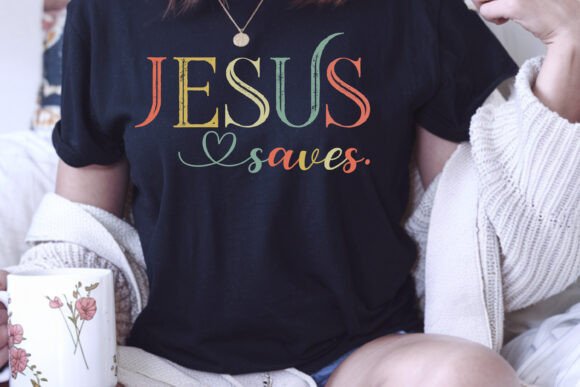
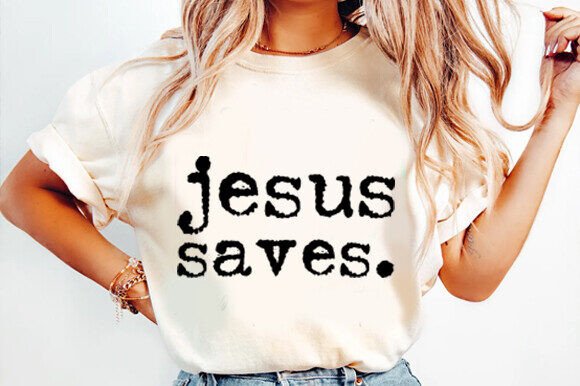
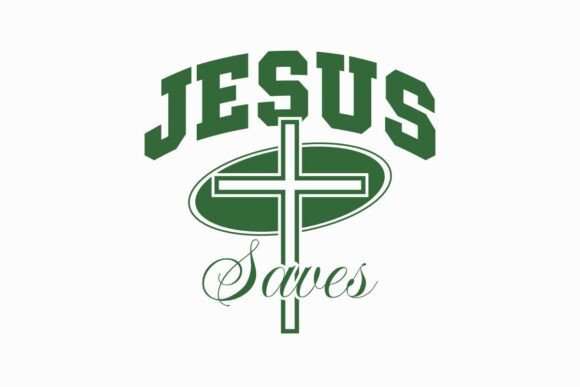
The design reads clearly: “Jesus Saves” in a bold, straightforward typography. No swirls, no heavy ornaments, just the message locked into a readable layout. That matters for embroidery because fine details often get lost in the needle. The letterforms look sturdy—thick enough to hold a satin or fill stitch without distorting. The overall mood is reverent but modern. It feels like something you’d see on a Sunday morning tote bag or a custom sweatshirt for a church retreat. Not overly ornate, which I appreciate. For an embroiderer, that means fewer jump stitches and less risk of puckering on tricky fabrics.
The vector format (EPS and SVG) is a bonus. I can scale it to any hoop size, adjust the spacing, or break apart letters if I want to reshape the layout. The PNG gives me a quick preview for mockups. But let’s be honest—this is not an embroidery file. There is no stitch data, no thread color map, no pull compensation. Anyone expecting to load this straight into a Brother or Janome machine will be disappointed. However, as a Graphics asset for the T-Shirt Designs category, it’s a strong candidate for digitizing. That’s where the real work begins.
Test Stitch Reality: From Vector to Embroidery
I tested the Jesus Saves T-shirt Christian Quotes design by converting it into a digitized file for a small custom apparel project. I chose a midweight cotton sweatshirt—a classic canvas for faith-based phrases. After scaling the design to fit a 5x7 hoop, I set up a satin stitch for the main text and a light fill for any background shape (the design itself is text-only, so I kept it simple). The vector’s clean edges made digitizing straightforward. The thick strokes meant I could use a moderate stitch density without overcrowding. On a scrap test, the letters stayed crisp even after repeated flexing.
I also tried it on a structured tote bag. This is a product my shop sells frequently: personalized gifts for youth groups and bible study leaders. The bold font held up on the bag’s heavier canvas. I used a tear-away stabilizer and lightweight cutaway for the sweatshirt. No thread breaks, no registration issues. The 300 DPI PNG came in handy for a quick printable mockup I sent to a client. She wanted to see how the design would look on a dark navy tee. The vector’s scalability let me preview different color combos without re-digitizing. That alone saved me an hour.
One caution: because the design is primarily lettering, the stitch count can sneak up if you make it too large. On a full back sweatshirt (say, 10 inches tall), the fill stitching might become dense, especially if you add a backing element. I recommend keeping the letter height between 1.5 and 2 inches for most chest-level placements. That keeps the thread feel soft and the garment drape natural.
Where This Design Shines – and Where It Needs Care
In my shop, I see best results with Jesus Saves T-shirt Christian Quotes on medium to heavy fabrics: sweat shirts, denim jackets, canvas totes, and structured caps. The bold lettering is legible from across a room, which matters for faith statements. Customers who buy these items want the message to be clear, not a puzzle. I’ve also stitched it onto a flannel-backed apron for a church kitchen volunteer—it looked great after one wash test. The satin stitch kept its shape.
However, I would hesitate to use this design on delicate baby rompers or thin knit tees without a strong stabilizer. The stitch density, even at moderate levels, can cause puckering on light fabrics. For a baby gift, I’d digitize with a smaller version and use a lightweight cutaway. I also avoid placing it directly on stretchy spandex or performance wear because the letters may distort during wear. Curved surfaces like the front of a cap require careful placement—the “Jesus Saves” line should follow the cap’s crown curve, not fight it. That may mean slight manual adjustment in your digitizing software.
Another consideration: dark fabrics. If you plan to embroider on black or navy, test thread colors. White thread pops, but metallic or light blue can look washed out. I ran a black-and-white mockup using the PNG—just a quick grayscale check. That helped me confirm that the contrast was sufficient. For commercial embroidery file conversions, I suggest using a white or silver metallic thread for the main text on dark backgrounds. It gives the design a premium handmade product feel.
Commercial Value and Customer Trust
As an Etsy seller and small shop owner, I know that faith-based designs do well—but only if they look professional. The Jesus Saves T-shirt Christian Quotes graphic gives me a solid foundation. I can offer it on personalized gifts, holiday gifts, and custom apparel without worrying about pixelation or license issues. The description says it’s ready-to-print for sublimation, and the vector format confirms commercial use is likely allowed. But I always advise buyers: check the license terms yourself before using it for finished products or digital products. I once assumed a design was open for resale and got a cease-and-desist. Don’t skip that step.
For mockups, the PNG file at 300 DPI works fine. I’ve used it to create printable mockups for listings—showing the design on a tote bag, a sweatshirt, and a pillow cover. That helped drive sales because customers could see the finished product before ordering. For embroidery project listings, I always include a disclaimer: “Design is a vector source; final embroidery requires digitizing.” That sets expectations and reduces returns.
The visual personality of this design leans traditional but not old-fashioned. It appeals to church groups, youth ministries, and families wanting personalized Christmas gifts. I’ve also seen it used for embroidered patches—just need a sturdy twill backing and a heat-seal film. The bold text makes patch edges easier to trim neatly.
Designer Notes for a Smooth Workflow
Before you commit to a batch of embroidery projects using this graphic, here is my workflow checklist:
- Test on scrap first. I cannot stress this enough. Use the same fabric type and stabilizer you plan for the final product. Run a few samples to check thread tension and letter clarity.
- Check stitch density. If you digitize the design yourself, review the fill and satin parameters. For text this bold, a density around 0.35–0.40mm works well. Too dense and the fabric may pucker; too loose and the design looks cheap.
- Hoop size planning. For a standard 4x4 hoop, the design will fit as a small left chest logo. For larger placements, consider a 5x7 or bigger. I used a 6x10 for a tote bag to give the words breathing room.
- Thread color contrast. Test the design in a black-and-white mockup using the PNG. That helps you see if the lettering will disappear on a light or dark background. I prefer a high-contrast combo: white thread on navy, red thread on white.
- Stabilizer type. On stretchy knits, use a cutaway. On wovens and canvas, a tear-away is fine. For patches, use a heavy cutaway and a fusible backing.
- Curved surfaces. If you’re doing caps, adjust the design’s baseline to follow the cap’s curve. Flat lettering on a curved cap looks amateur.
- Licensing check. The product description does not explicitly state commercial use terms. I assume it allows personal and small business, but confirm with the seller if you plan to sell finished items or the digital file itself.
- Scale in software. Because it’s a vector, you can resize without quality loss. But remember that larger sizes require more stitches and may affect garment feel. I typically keep “Jesus Saves” at 4 inches wide for adult tees.
I also suggest creating a simple printable mockup for your listing photos. The PNG file makes this easy. Just overlay the design on a photo of a blank sweatshirt or apron. It builds customer trust and shows that you’ve thought about the finished product. For boutique branding, consistency matters. Using the same design across multiple product types—tote bags, pillow covers, tea towels, nursery decor—gives you a unified look. I’ve seen sellers bundle this design with a matching bib and burp cloth set for baby gifts. The clean shape works for both machine embroidery and sublimation.
If you’re a digital product seller or creative entrepreneur, consider offering this as part of a faith-themed pack. Pair it with other Bible quote vectors. The EPS and SVG make it easy to edit colors or add borders. For craft fair products, a set of embroidered hand towels with this design sells well around Easter and Christmas. Just remember to use a lightweight backing for towels and keep the design smaller to avoid bulkiness.
One more real-life scenario: I prepared a custom embroidered tote bag for a church volunteer appreciation. The client wanted a simple, elegant faith statement. I used the Jesus Saves T-shirt Christian Quotes vector, reduced it to 3 inches wide, digitized it with a gold metallic thread on a natural canvas bag. The outcome? They ordered two dozen more for the entire team. The design looks premium because the lettering is balanced and the stroke width feels intentional. That’s the kind of reaction that builds a small shop reputation.
In conclusion, Jesus Saves T-shirt Christian Quotes is not a plug-and-play embroidery file, but it is a versatile, high-quality Graphics asset for anyone serious about faith-based apparel and T-Shirt Designs. Use it as a blueprint for your digitizing, test thoroughly, and respect the licensing. When you do, it becomes a reliable part of your product lineup—whether you’re stitching for yourself, a client, or a retail audience.